Good morning

Indus Robotics
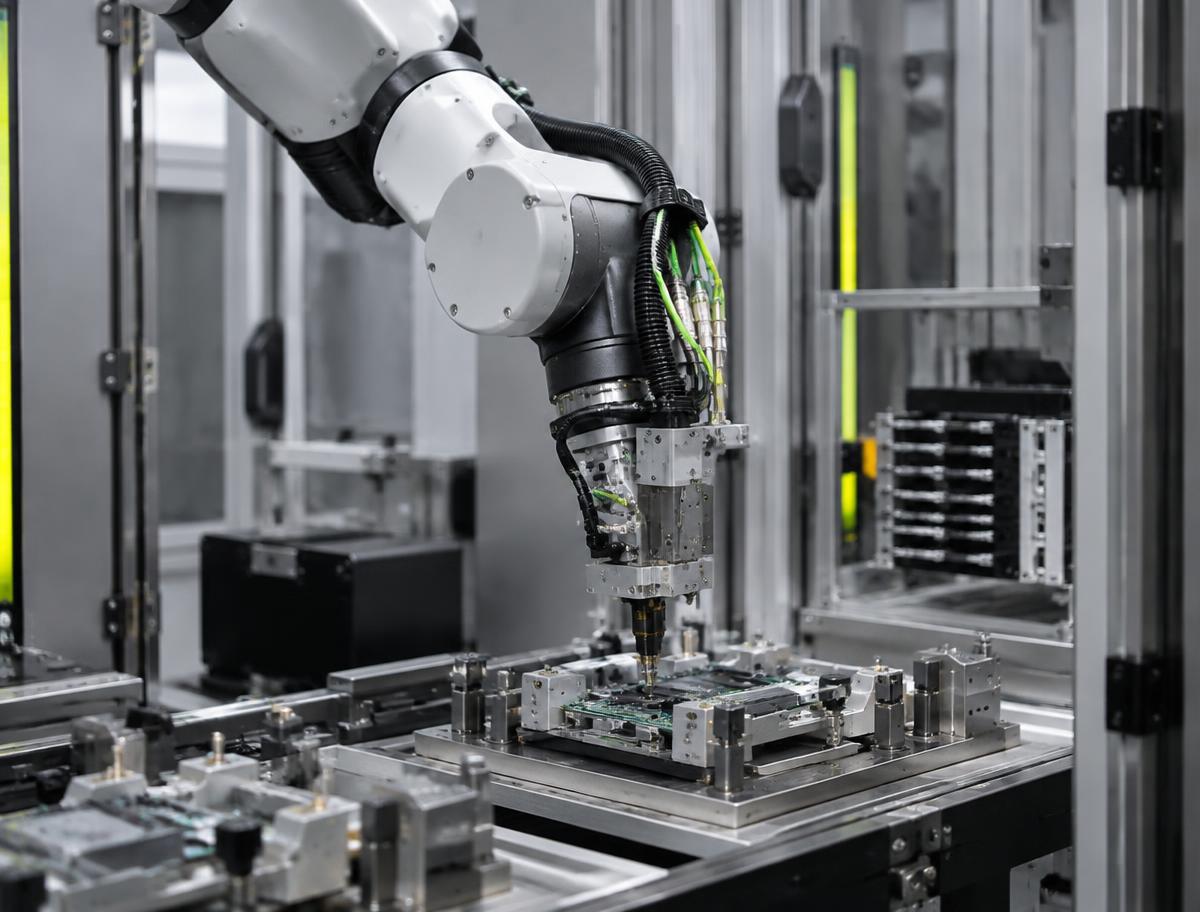
Industrial robotic arm

Industrial Robotics · Precision Motion · Automation

Powering the future of industrial robotics

Advanced robotic components, precision reducers, and multi-axis control systems engineered for repeatable, high-reliability industrial automation.

Explore Products

500+

Components Deployed

99.8%

Uptime Reliability

6-Axis

Robot Architecture

24/7

Engineering Support

Core Architecture

Engineering the Technologies Behind Automation

Modern industrial automation relies on the deterministic coordination of mechanical dynamics and real-time electronic architectures. Achieving micro-scale repeatability and long-term durability requires harmonious interaction between precision actuators, zero-backlash gearing, dynamic sensing, and multi-axis kinematic control. We deliver the critical technologies underpinning these systems—whether deployed as standalone joint modules or integrated within complete automation architectures.

Our Portfolio

Explore our robotics technology

Discover the technologies behind modern robotic systems — from individual motion components to complete industrial automation platforms.

01

Actuators

Controlled movement where your machine needs it.

Actuators convert electrical input into controlled linear or rotary motion. They define how accurately and how repeatably a robotic axis moves, and are used in robotic joints, positioning systems, handling mechanisms, and automated machinery.
Explore →
·
02

Precision Reducers

Reduced speed, multiplied torque, controlled motion.

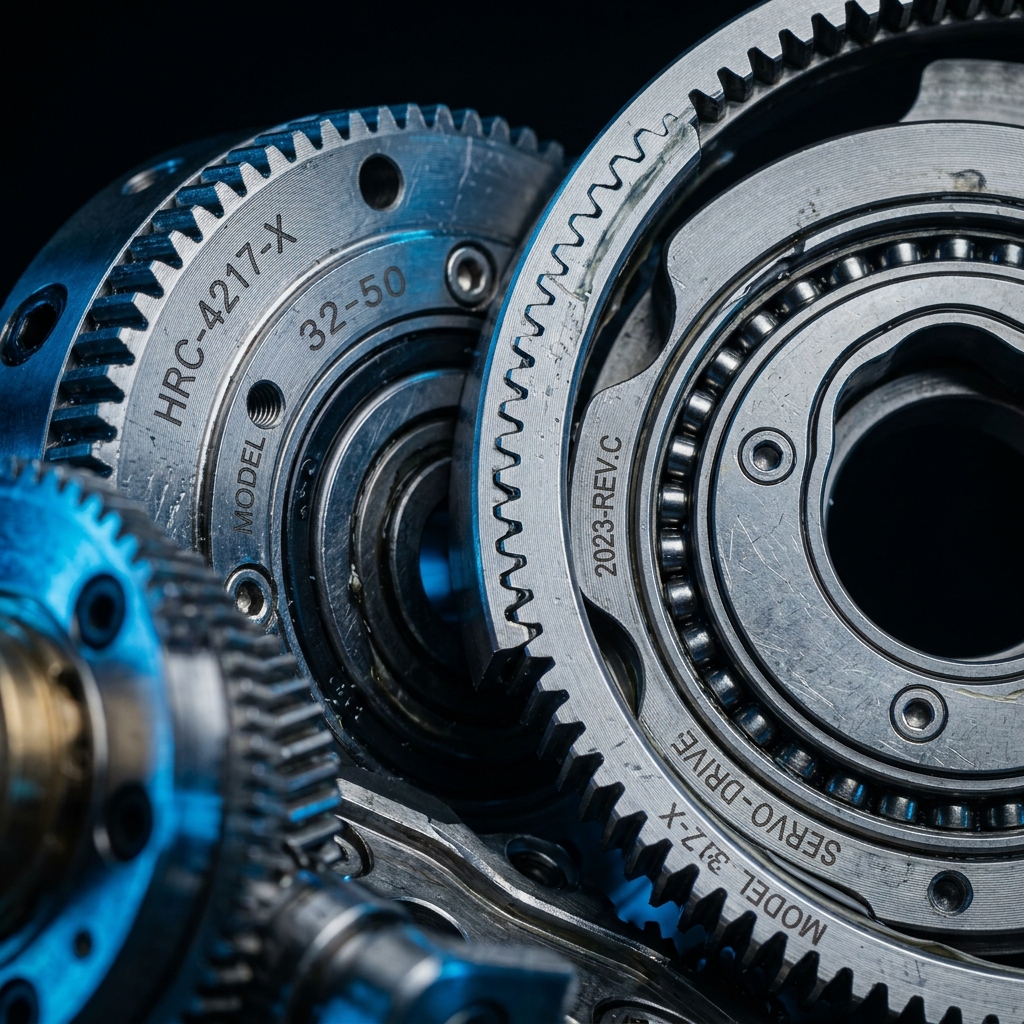
Precision reducers reduce motor speed and multiply usable torque. In robotic joints they also contribute to controlled, repeatable movement, making them central to arms, rotary axes, and automated machinery.

Explore →
·
03

Robotic Wheels

Mobility for autonomous industrial platforms.

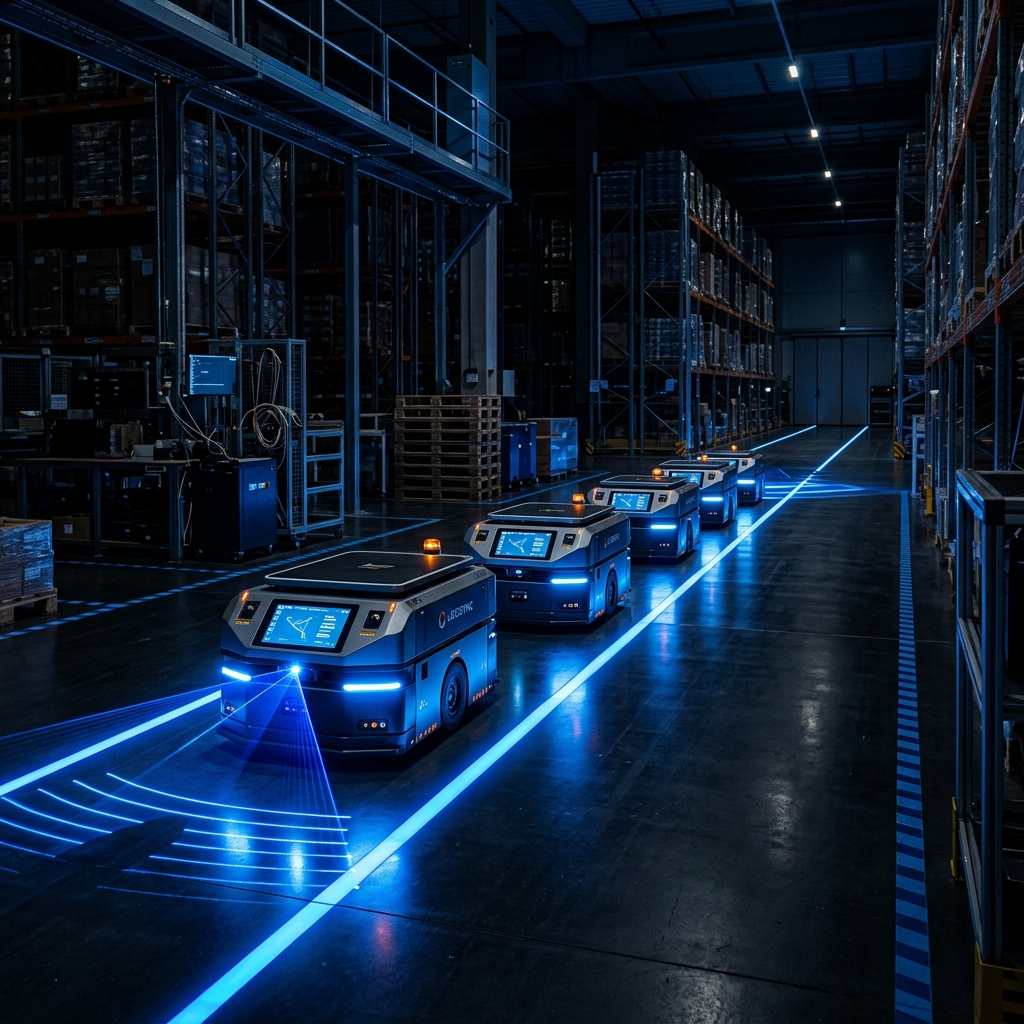
Robotic wheels and drive modules move autonomous platforms. Drive, omni, and Mecanum options support AGV and AMR applications where payload, traction, and manoeuvrability define the design.

Explore →
·
04

Robotic Arms

Multi-axis motion with repeatable positioning.

Robotic arms deliver coordinated multi-axis movement with repeatable positioning. They are applied to assembly, welding, pick and place, machine tending, and inspection across industrial production.

Explore →
·
05

Industrial Robots

Production automation built for repeatable output.

Industrial robots automate production tasks such as assembly, welding, handling, palletising, and inspection, supporting consistent process execution and predictable cycle behaviour within integrated cells.

Explore →
·
06

Control Systems

The logic that turns commands into coordinated motion.

Control systems coordinate motion across a machine. Controllers, servo drives, PLCs, sensors, and feedback devices work together so commands become accurate, corrected, repeatable movement.

Explore →
·

Interactive Engineering Tool

Find the right technology for your application

Filter component families by technology discipline, industrial task, and engineering priority. Matched items link directly to full technical specifications.

Linear Actuators industrial robotics component
Actuators

Linear Actuators

The Linear Actuator converts rotary motor drive into guided linear travel for handling, feeding, and positioning axes. Engineered with precision ballscrews or high-load timing belts, it provides high thrust stiffness, configurable stroke lengths, and repeatable end positioning. Widely deployed across Cartesian pickers, gantry stages, and automated test fixtures.

Linear travelGuided axisFeedback ready
View Details
Rotary Actuators industrial robotics component
Actuators

Rotary Actuators

The Rotary Actuator combines a frameless torque motor, high-reduction zero-backlash gearing, and high-resolution absolute feedback into a self-contained joint assembly. Designed for robotic arms, rotary tilt tables, and antenna positioning pedestals where structural rigidity and hollow-bore routing are critical.

Rotary outputHollow boreClosed-loop feedback
View Details
Electric Actuators industrial robotics component
Actuators

Electric Actuators

Electric Actuators deliver clean, energy-efficient linear thrust without the operating costs and maintenance overhead of compressed air systems. With programmable force control and unlimited multi-stop position setpoints, they eliminate mechanical shock during part clamping and pressing operations.

Electric driveProgrammable forceMulti-stop positioning
View Details
Servo Actuators industrial robotics component
Actuators

Servo Actuators

The Servo Actuator integrates a brushless AC servomotor, zero-backlash harmonic gear, absolute encoder, and digital drive controller into a single unified casing. By eliminating external motor cables and cabinet drives, it simplifies machine wiring and reduces electrical interference across multi-axis machines.

Integrated driveDual encodersSTO safety
View Details
Planetary Reducers industrial robotics component
Precision Reducers

Planetary Reducers

Planetary Reducers distribute driving loads across multiple planet gears, delivering high torsional stiffness, exceptional efficiency (>95%), and compact inline packaging. Widely applied on machine tool feed axes, packaging equipment, and rack-and-pinion drivetrains.

Planetary gearingInline / Right angleLow backlash
View Details
Harmonic Reducers industrial robotics component
Precision Reducers

Harmonic Reducers

Harmonic (Strain Wave) Reducers operate on elastic deflection of a flexible thin-walled gear cup (Flexspline) engaging with a rigid outer ring (Circular Spline). They deliver absolute zero backlash, exceptional single-stage reduction ratios (up to 160:1), and large center hollow bores ideal for internal robotic arm cabling.

Zero backlashStrain waveHollow bore
View Details
Cycloidal Reducers industrial robotics component
Precision Reducers

Cycloidal Reducers

Cycloidal Reducers utilize rolling cycloidal disc profiles engaging with fixed pin rings, avoiding the tooth shear failure risks of standard involute gears. Engineered for heavy industrial robot base and shoulder joints where extreme bending moments, emergency stop forces, and reversing acceleration spikes occur.

Cycloidal pin-wheel500% shock loadSub-arcmin lost motion
View Details
Industrial Gearboxes industrial robotics component
Precision Reducers

Industrial Gearboxes

Industrial Gearboxes provide dependable, high-efficiency mechanical reduction for conveyors, automated indexing lines, and material handling systems. Built with precision ground helical and bevel gears housed in rigid ductile iron cases.

Helical bevelHeavy-duty castingModular mounting
View Details
Drive Wheels industrial robotics component
Robotic Wheels

Drive Wheels

The Drive Wheel is engineered specifically for automated guided vehicles and mobile robots operating on industrial plant floors. Combining an efficient brushless motor, compact planetary gearbox, and durable polyurethane tread, it provides reliable traction, smooth acceleration, and secure parking on inclines.

Polyurethane tireSuspension built-inFail-safe brake
View Details
Omni Wheels industrial robotics component
Robotic Wheels

Omni Wheels

Omni Wheels feature small passive rollers positioned around the circumference of the main wheel, perpendicular to the wheel axis. When multiple omni wheels are arranged on a chassis, the vehicle can travel in any direction without turning its wheels, making it ideal for compact mobile inspection and sorting platforms.

Dual roller rowAluminum hubZero turning scrub
View Details
Mecanum Wheels industrial robotics component
Robotic Wheels

Mecanum Wheels

The Mecanum Wheel utilizes peripheral rollers angled at 45 degrees to the wheel plane. By varying the rotational speeds and directions of four Mecanum wheels independently, a vehicle generates vector thrust that moves it forward, backwards, sideways (crabbing), or rotates in place without changing vehicle heading.

45-degree rollersVector mobilityZero turn radius
View Details
Mobile Robot Modules industrial robotics component
Robotic Wheels

Mobile Robot Modules

Mobile Robot Modules combine traction motor, steering servomotor, dual planetary gearboxes, suspension, and safety encoders into a single bolt-on unit. AGV and AMR manufacturers can standardize their chassis design around these modular units, drastically shortening vehicle time-to-market.

Steerable unit360-degree steeringDual servo drive
View Details
4-Axis Robots industrial robotics component
Robotic Arms

4-Axis Robots

Four-axis robots (such as SCARA and Cartesian architectures) feature rigid arm links operating in the horizontal X-Y plane with a dedicated vertical Z-axis quill and rotational theta axis. Ideal for rapid assembly, component insertion, and high-cadence pick-and-place operations where parts remain parallel to the work surface.

4 controlled axesSCARA / CartesianUltra-fast cycle
View Details
6-Axis Robots industrial robotics component
Robotic Arms

6-Axis Robots

The 6-Axis Robotic Arm coordinates six articulated rotary joints, allowing end-of-arm tooling to achieve any commanded position (X, Y, Z) and orientation (Roll, Pitch, Yaw) within its spherical reach envelope. Essential for contoured welding, 3D laser cutting, machine tending, and multi-angle component assembly.

6 controlled axesFull 3D dexterityController compatible
View Details
Collaborative Robots industrial robotics component
Robotic Arms

Collaborative Robots

Collaborative Robots (Cobots) feature rounded ergonomic profiles, lightweight aluminum alloy links, and sensitive joint torque sensors that automatically halt motion upon detecting human contact (ISO/TS 15066 compliance). They eliminate the need for bulky safety cages, allowing operators and robots to work together on the same production line.

Human-safeTorque sensorsLead-through teach
View Details
Pick & Place Robots industrial robotics component
Robotic Arms

Pick & Place Robots

Pick & Place Delta Robots utilize a parallel kinematic structure consisting of three lightweight carbon fiber arm linkages connected to a common base. Because the heavy servo motors remain stationary on the overhead base frame, the moving end-effector has minimal inertia, allowing extreme accelerations up to 15 G.

Delta kinematicsUp to 180 picks/minConveyor tracking
View Details
Assembly Robots industrial robotics component
Industrial Robots

Assembly Robots

Assembly Robots perform high-cadence mechanical joining, fastener driving, press-fitting, and adhesive dispensing. Engineered with sub-millimeter path accuracy and force feedback to prevent part jamming and guarantee 100% compliant joints.

Tactile insertionTool changerData logging
View Details
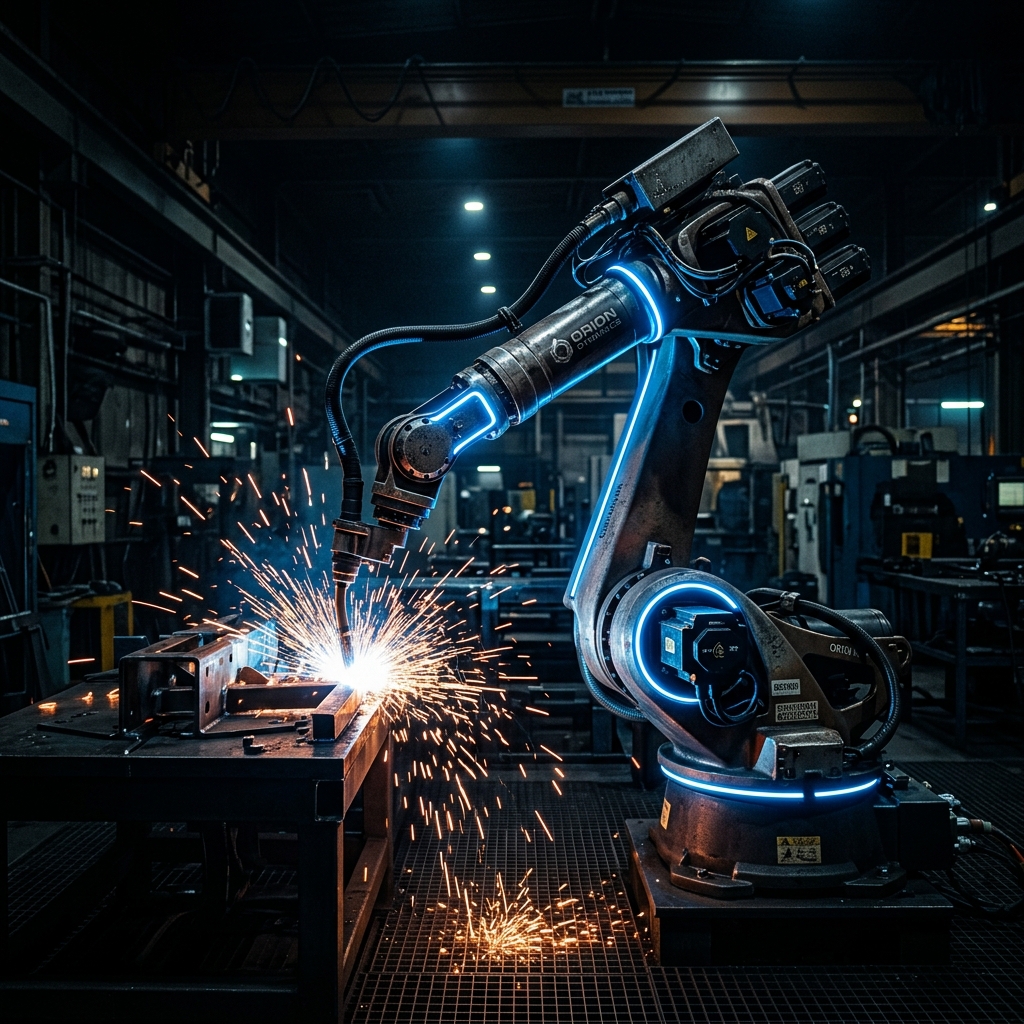
Welding Robots industrial robotics component
Industrial Robots

Welding Robots

Welding Robots combine continuous-path trajectory accuracy with specialized hollow-wrist mechanical designs that shield torch cables from heat and spatter. Fully integrated with pulse arc welding power sources and multi-axis positioner tables.

Hollow wristLaser seam trackingArc coordinated
View Details
Handling Robots industrial robotics component
Industrial Robots

Handling Robots

The Industrial Handling Robot handles raw billets, cast parts, stamped sheets, and machine tool blanks with extreme repeatability across continuous multi-shift production runs. Engineered with IP67 sealed joints resistant to abrasive metal chips and cutting coolant mists.

IP67 washdownHeavy payloadDual gripper ready
View Details
Inspection Robots industrial robotics component
Industrial Robots

Inspection Robots

Inspection Robots bring CMM-level metrology directly onto the production floor. By guiding high-resolution 3D blue-light scanners and laser triangulation sensors along pre-programmed CAD paths, they digitize complex contoured parts in seconds.

Metrology grade3D CAD comparisonSub-0.02mm pose stability
View Details
Palletizing Robots industrial robotics component
Industrial Robots

Palletizing Robots

Palletizing Robots automate the heavy, repetitive task of stacking corrugated boxes, bags, pails, and crates onto shipping pallets. With wide reach envelopes and high vertical stroke, they can service multiple infeed conveyors and pallet build stations simultaneously.

4-axis palletizerPayload to 300kgReach to 3.2m
View Details
Robot Controllers industrial robotics component
Control Systems

Robot Controllers

The Robot Controller serves as the central brain of an industrial robot. It computes forward and inverse kinematic transformations, plans velocity profiles, supervises tool center point (TCP) trajectories, and enforces certified safety boundaries.

Kinematic CPUSIL 3 safetyTeach pendant interface
View Details
Motion Controllers industrial robotics component
Control Systems

Motion Controllers

The Coordinated Motion Controller plans and supervises motion across multi-axis machines, gantries, and automated production lines. With microsecond distributed clock synchronization, it executes linear, circular, and spatial spline interpolation without axis skew.

Up to 64 axesEtherCAT DCSub-microsecond jitter
View Details
Servo Drives industrial robotics component
Control Systems

Servo Drives

Servo Drives provide the regulated electrical power that turns trajectory commands into precise physical motor torque. Utilizing high-frequency Field-Oriented Control (FOC) and Silicon Carbide (SiC) power stages, they deliver ultra-low current ripple, high efficiency, and instant response to load disturbances.

FOC controlUniversal feedbackSTO SIL 3 certified
View Details
PLC & Automation industrial robotics component
Control Systems

PLC & Automation

Industrial PLCs manage cell sequencing, safety logic, pneumatic valves, sensor polling, and operator interfaces across automated manufacturing lines. Built for high electromagnetic immunity and continuous operation in demanding electrical environments.

IEC 61131-3Modular I/ODual Ethernet redundancy
View Details
Sensors & Feedback industrial robotics component
Control Systems

Sensors & Feedback

Sensors and Feedback devices provide the critical physical state measurements required for closed-loop motion control. From 26-bit optical absolute encoders reporting joint angles to multi-axis force-torque transducers at the robot wrist, they ensure high accuracy and adaptive tactile response.

26-bit resolutionBiSS-C protocolBattery-less multi-turn
View Details

Robotics Ecosystem

One ecosystem. Every movement.

A modern robot is an interconnected system of power, motion, control, sensing, and intelligence. Every layer must interoperate deterministically.

Industry 4.0 Architecture

Connecting robotics with the intelligent factory

Connected robots communicate with sensors, controllers, edge analytics, and cloud data platforms to create deterministic, transparent production environments.

Industrial IoTOPC UAEtherCAT DCMQTTEdge ComputingPredictive AnalyticsDigital Twin

Knowledge Center

Engineering resources

Everything engineers need to evaluate, design, integrate, and deploy robotic systems.

Technical Reference

Frequently Asked Questions

Direct engineering answers to common technical inquiries regarding robotics, actuators, gearing, and control architectures.

What is an industrial robot?

An industrial robot is a reprogrammable, multi-purpose mechanical manipulator with three or more programmable axes of movement. Used across manufacturing plants, industrial robots execute tasks such as component assembly, arc welding, machine tending, and palletizing with high repeatability, reducing cycle times and eliminating operator exposure to hazardous environments.

What is a robotic actuator?

A robotic actuator is an integrated electro-mechanical drive module that converts electrical energy into controlled rotary or linear mechanical motion. A typical robotic actuator packages a brushless electric motor, precision speed reducer, position feedback encoder, mechanical brake, and drive control electronics into a compact unit designed for joint articulation.

What does a precision reducer do in a robotic system?

A precision speed reducer decreases rotational speed from a high-speed servo motor while proportionally increasing delivered torque. In robotic joints, precision reducers also reduce reflected inertia back to the motor by the square of the gear ratio and maintain sub-arcminute backlash, ensuring stiff, repeatable joint position control under dynamic reversing loads.

How do I select a robotic actuator for my application?

Actuator selection begins with calculating continuous and peak torque requirements, taking into account link mass, payload, center-of-gravity offsets, and dynamic acceleration rates. Engineers must also evaluate required output speeds, duty cycles, encoder resolution, communication fieldbus support, hollow-shaft diameter needs, and thermal dissipation constraints.

How do I select a reducer for a robotic arm joint?

Selecting a robotic reducer requires evaluating joint-specific mechanical demands: Axes 1–3 (Base/Shoulder/Elbow) typically demand cycloidal reducers to handle high tilting moments, large continuous torques, and high shock-load risks during emergency stops. Axes 4–6 (Wrist) typically utilize lightweight harmonic (strain wave) reducers with hollow bores to reduce arm mass while enabling internal cable routing.

What is the difference between an AGV and an AMR?

AGVs (Automated Guided Vehicles) follow fixed physical or magnetic guide paths, optical floor tape, or fixed laser targets. If an obstacle blocks their path, they typically stop until the path is cleared. AMRs (Autonomous Mobile Robots) leverage on-board LiDAR, 3D vision, and SLAM algorithms to dynamically navigate unstructured environments, calculating real-time detour paths around unexpected obstacles.

Intent-aware next step · score 10

Download Catalog

Researching — low friction catalog CTA.

Engineering Consultation

Ready to build your next robotic system?

Whether you're specifying a high-torque joint actuator, developing a specialized AMR chassis, or planning an entire automated manufacturing cell, our application engineers are ready to assist.